Krishi Bill 2020 – A Turning Point Of Agriculture Industry
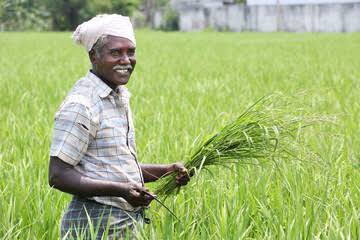
One of the biggest factors plaguing the growth of agriculture sector in the country is the inability of the farmer to find a market and to get a fair price to his produce. To address the issue, the erstwhile governments of different states enacted the Agricultural Produce Market Regulation Acts (APMC Acts), which authorised them to set up and regulate marketing practices in wholesale markets.

The objective of these markets was to ensure that farmers get a fair price for their produce. However, with each passing year, the APMCs turned out to be inefficient with increasing cartelisation of middlemen, ban on private players to enter the trade, increasing corruption etc. 

Realising the inadequacies in the existing APMC acts of various states to offer a proper marketing mechanism for the farmers to sell their produce, the Narendra Modi government in 2014 had announced a unified National Agriculture Market (NAM). NAM is a pan-India electronic trading portal which seeks to connect existing APMCs and other market yards to create a unified national market for agricultural commodities.

Continuing the reform agenda, the Modi government has now introduced three more bills to promote much easier trade for the farm produce and to provide a competitive market for the producers outside the existing APMC system.

The two bills passed by both the houses of the Parliament are a) The Farmers’ Produce Trade and Commerce (Promotion and Facilitation) Bill, 2020and b) The Farmers (Empowerment and Protection) Agreement on Price Assurance and Farm Services Bill, 2020. Both these bills were already in implementation since June as Ordinances. The former liberalises the intra and inter-state trade of farm produce (including online) while the latter provides a framework for contract farming.

The third ordinance The Essential Commodities (Amendment) Ordinance, 2020, also promulgated in June has also been passed as a bill by Lok Sabha and Rajya Sabha. This trio of agri reforms agenda is being rightly equated to the 1991 movement for delicensing of industry by agriculture scientists and experts such as Dr Ashok Gulati.

However, this hasn’t stopped the politician-activist-middlemen nexus from casting aspersions of these bills and terming them anti-farmer. But there is no doubt that these reforms will positively benefit both farmers and consumers just like it happened when India opened up airlines, telecom and other sectors for private sector. This not only opens the moribund sector for big corporations but also creates immense opportunities for entrepreneurs. And like always the ones opposing the reforms will have egg on their faces.

Raam-Baan cure to solves the woes of Indian farmers is *Contract Farming*

But facilitating contract farming alone won’t do much if it’s not accompanied by the changes is Essential Commodities Act of 1956 (ECA) and breaking the monopoly of Agriculture Produce Market Committee (APMC).

How? Well, the ECA is a legislation from an era of shortages of the Nehruvian India where the government needed to crack down on hoarders of essential commodities. It isn’t compatible with contract farming, where large volumes of commodities will need to be stored and moved seamlessly across state borders.

Similarly, breaking of APMC monopoly is critical to the success of contract farming, for, the contractor will need the freedom to transport and sell it to any buyer not just within a particular state but anywhere within the country.

Snapshot of Farm Bills 2020

The Farming Produce Trade and Commerce (Promotion and Facilitation) Bill, 2020:

The Farming Produce Trade and Commerce (Promotion and Facilitation) Bill, 2020 aims at creating additional trading opportunities outside the APMC market yards to help farmers get remunerative prices due to additional competition. Farmers can now sell their agricultural produce in a market of their choice at better prices.

  • The newly proposed law will allow intra-state and inter-state trade of farmers’ produce beyond the physical premises of APMC markets thus giving freedom for the farmers and traders to sell or purchase farm products anywhere.
  • The proposed law also provides buyers with the freedom to buy farmers’ produce outside the APMC markets without having any license or paying any fees to APMCs.
  • The Bill prohibits state governments from levying any market fee, cess or levy on farmers, traders for the trade conducted on farmers’ produce conducted in an ‘outside trade area’.
  • Under the proposed law, electronic trading in transaction platform has been proposed for ensuring a seamless trade electronically. The proposed law also allows private individuals, FPOs and co-ops to set up electronic trading platforms in these areas.
  • There will also be a separate dispute resolution mechanism for the farmers.

The Farmers (Empowerment and Protection) Agreement on Price Assurance and Farm Services Bill, 2020:

The Farmers (Empowerment and Protection) Agreement on Price Assurance and Farm Services Bill, 2020 creates a framework for contract farming through an agreement between a farmer and a buyer prior to the production or rearing of any farm produce.

  • The proposed law provides for a farming agreement between a farmer and a buyer prior to the production or rearing of any farm produce. The minimum period of an agreement will be one crop season or one production cycle of livestock. 
  • Under this legislation, farmers are empowered to directly engage with processors, wholesalers, aggregators, retailers exporters etc, thus eliminating intermediaries resulting in full realisation of the price for the farm produce. 
  • The proposed law also states that the price of farming produce negotiated between the trader and the farmer should be mentioned in the agreement. 
  • The buyer will be responsible for providing necessary means or inputs for good crop yield. Under the bill, it is the responsibility of the buyer to provide agricultural equipment to the farmer. 
  • It provides for a three-level dispute settlement mechanism: the conciliation board, Sub-Divisional Magistrate and Appellate Authority.

The Essential Commodities (Amendment) Bill, 2020:

The amendments to the Essential Commodities Act, 1955 allows the central government to regulate the supply of certain food items only under extraordinary circumstances. 

  • Under the legislation, the central government may regulate or prohibit the production, supply, distribution, trade, and commerce of such essential commodities. 
  • The proposed bill provides for the central government to regulate the supply of certain food items including cereals, pulses, potatoes, onions, edible oilseeds, and oils, only under extraordinary circumstances. 
  • The legislation requires that imposition of any stock limit on agricultural produce must be based on price rise.
  • The bill amends the Essential Commodities Act to provide that stock limits for agricultural products can be imposed only when retail prices increase sharply and exempts value chain participants and exporters from any stock limit. 

Significance of the proposed laws:

  • The three historic legislation will unlock the overly regulated agricultural markets in the country.
  • The laws will provide more choices for the farmer and lessen the marketing costs for the farmers thus helping them to get better prices. It will also help farmers of regions with surplus produce to get better prices and consumers of regions with shortages, lower prices.
  • The laws will enable the farmer to make use of modern technology and better inputs to enhance their farm produce and its trade. It will reduce the cost of marketing and improve the income of farmers.
  • These new laws will encourage large companies, food processing firms, exporters, etc, to invest in the farm sector and source good-quality farm produce.
  • The announced amendment to the Essential Commodities Act is expected to help both farmers and consumers while bringing in price stability.
  • The proposed changes will also create a competitive market environment and prevents wastage of agri-produce that happens due to lack of storage facilities.

Let’s now turn to the genuine concerns around the agri reforms which are missing from the narrative.

First, under the amended ECA, the stock limit may be re-imposed if there is a 100 per cent increase in retail price of horticultural produce and a 50 per cent increase in the retail price of non-perishable agricultural food items. The increase will be calculated over the price prevailing immediately preceding twelve months, or the average retail price of the last five years, whichever is lower.

This sort of protection for the consumer at the expense of the farmer stands to undo the whole reform itself. Basically, if price of say Onion increases from Rs 30 per Kg to 60 per Kg (100 per cent increase in one year), then stocking limits will be back. The ceiling for reimposition could’ve certainly been higher given that such kinds of price fluctuation isn’t uncommon for perishables (especially over a period of one year) and whenever there is price rise, there will be pressure on the government to “do something”. This will hurt the farmer.

Just before the government introduced these reform bills in the Parliament, it banned the export of onions due to price rise. Calling out this government tendency to put consumer’s interest over the farmer’s is something that should’ve been the top priority of the opposition. Alas

Second, in the contract farming bill, the arrangement provides for a three-level dispute settlement mechanism: the conciliation board, Sub-Divisional Magistrate and Appellate Authority. Now, this sounds good on paper but we need to see how it plays out in the implementation phase. There have been cases in the past (in states which allow contract farming) where farmers sold their produce in the market instead of selling it to the business they had signed contracts with because they were getting a higher price in the market.

Now, theoretically, the companies or agri entrepreneurs can take the matter to dispute settlement authority but we all know that the farmers have an upper hand in this power relation. Moreover, any government will find it hard to restrain Itself from intervening on the side of farmers when they break their contract.

Third, individual farmers contracting with big companies, processors, etc isn’t a great way to secure their interests. The government, both at the centre and the state level, must focus on creating more and more Farmer Producer Organisations and strengthening them as an institution so that they are able to bargain from a position of strength.

Additionally, these organisations need to be given financial incentives. As Dr Gulati recommend FPOs should get their working capital at 7 per cent interest rate — a rate that the farmers pay on their crop loans – rather than them depending on microfinance institutions and get loans at 18-22 per cent interest rates.

Farmers will be better off if they try to negotiate better terms under these radical reform bills rather than falling for propaganda peddled by the usual suspects. The ones fighting for blanket rollback of these three reform bills aren’t their well-wishers. They are the same people who have kept them poor and stagnated for decades. It’s time they welcomed the liberalisation of agriculture sector with open arms.

Thank you

K. Trivedi

M. Sodagar
INDIAN INC COUNTERING CONTAGION.

COVID-19 AND OVERALL IMPACT

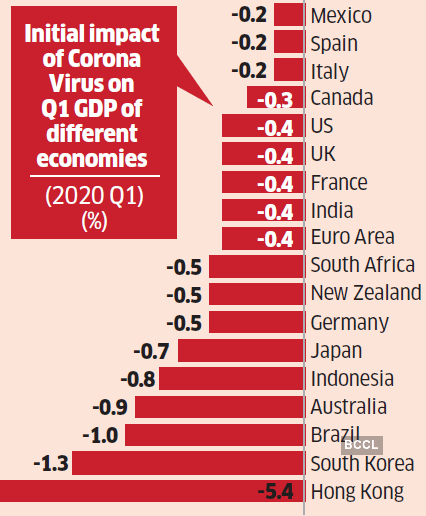
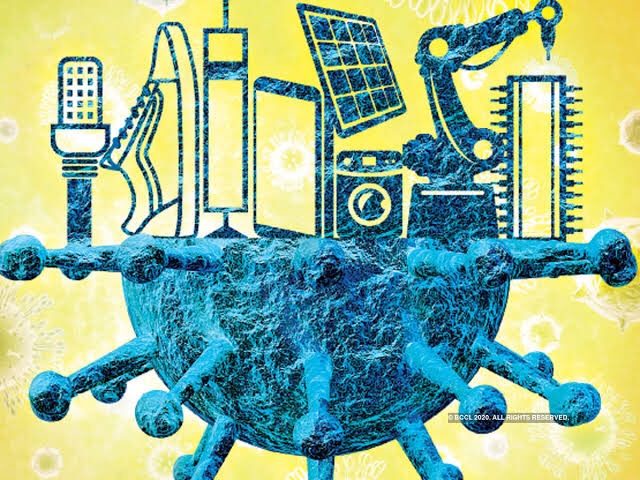
The Covid-19 pandemic has hit the world at a scale and speed that we have only seen so far in doomsday movies. Truth, as we are seeing it today, is way more frightening than fiction. The effect of the corona virus is going to be unimaginably high. Worse, it’s going to end up having a long tail too.

The Novel Covid-19 virus is now completely entrenched in the global economic system if not the society at large. In India , As a preventive measure, the government has ordered a total shut down across the country which will soon affect every individual both directly and indirectly.

Based on what has transpired in other countries it can be concluded that nothing much can be done and depending on how long the virus proliferates the economic impact will be even more severe. The government and central bank can at best try and alleviate suffering but cannot provide a cure and the damage to the economy will be deep.

Since then, Covid-19 risks have been priced so aggressively across various asset classes that some fear a recession in the global economy may be a foregone conclusion.
Business leaders are asking whether the market drawdown truly signals a recession, how bad a Covid-19 recession would be, what the scenarios are for growth and recovery, and whether there will be any lasting structural impact from the unfolding crisis.

 2019 joint report from the World Health Organization (WHO) and the World Bank estimates the impact of such a pandemic at 2.2 per cent to 4.8 per cent of global GDP (US$3 trillion). That was well before the world knew of Covid-19.

In truth, projections and indices won’t answer these questions. Hardly reliable in the calmest of times, a GDP forecast is dubious when the virus trajectory is unknowable, as are the effectiveness of containment efforts, and consumers’ and firms’ reactions. There is no single number that credibly captures or foresees Covid-19’s economic impact.

Instead, we must take a careful look at market signals across asset classes, recession and recovery patterns, as well as the history of epidemics and shocks, to glean insights into the path ahead.

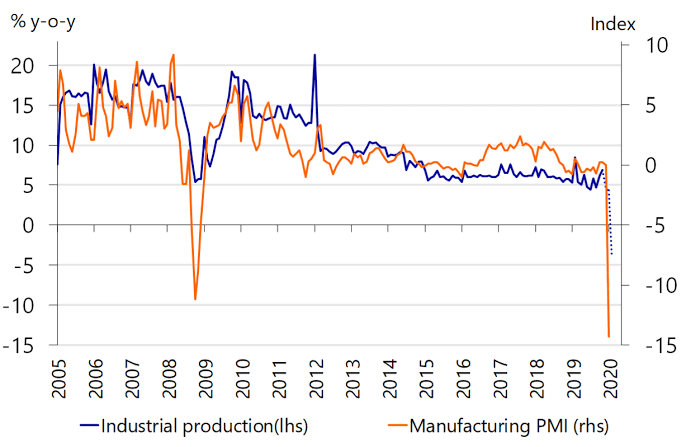
Fall in manufacturing and industrial production.

CURRENT AND FUTURE IMPACTS ON INDIAN ECONOMY

It does not require an economist to tell that a complete social and economic lockdown of India for 21 days would severely impact the supply side of the economy, that is, production and distribution of goods and services, except for the essential items that are exempt.

In an economy already reeling under a demand depression, rising unemployment, and lowering of industrial output and profits, all of which happening together for several quarters now, a supply-side constraint would deliver a big blow, jeopardising growth prospects and social and economic wellbeing of a large number of people.

At the moment, it is a supply-side problem. Both production and distribution of non-essentials have come to a halt. This affects at least 55% of the economy for three weeks or about Rs 2 lakh crore. It may even be larger due to previous partial lockdowns by various state governments.

Now, after the lockdown is lifted, there will quite possibly be an increase in sales which will be met through existing inventories. This does not, however, add to the GDP (as these goods and services had already been produced and accounted for). It may take a few more months for the final production and sales to resume.


REVIVAL OF COVID-19 INDIAN ECONOMY.

The economic cost of social distancing being practised in order to prevent the spread of coronavirus. Not just the daily-wage labourers, but small businesses as well as freelancers and those operating in the gig economy are equally feeling the heat. Of course, big business is also bearing the cost of social distancing. But big business has the money and the scale to survive the crisis.

All this is expected to pull down economic growth in India between April and June 2020. Of course, growth is expected to fall across the world. Governments across the world have come up with rescue packages to deal with this expected slowdown in growth. The idea is to put some money in the hands of people and encourage them to not cut down on their consumption.

In such an environment, universal basic income (UBI)-like measures will help quite a lot. The Australian government has announced that a cash payment of $750 (Australian dollars) will be made to six million low-income earners. American politicians are also discussing a one-time payment of $1,200 for individuals earning up to $75,000 a year.

UBI-like options for India

Let’s take a look at some similar measures which can be possibly implemented in India.

Advance payment of pensions: This is something that the Kerala government is planning to do. Two months of pension is to be paid in advance. Over and above this, ₹1,000 will be paid to families not eligible for pensions. In a statement released to the press, economist, Jean Drèze has suggested that “advance payment of (at least) three months’ pension should be made immediately, to help widows and the elderly who are the most vulnerable in this crisis.”

Payment into Jan Dhan accounts: Currently, there are 382.6 million Jan Dhan accounts. The central government can directly transfer money into these accounts. At ₹2,000 and ₹3,000 per account, the total bill for the government will work out to ₹76,520 crore and ₹1.15 trillion, respectively. This will be a really mass-market measure that can help the poorest of the poor.

Advance payment of PM-Kisan amount: The Pradhan Mantri Kisan Samman Nidhi (PM-KISAN) scheme provides ₹6,000 per year per family to all farmers who own land. The government can pay two out of the three instalments for 2020-21 at the beginning of the year.

Payment to daily-wage labourers: The Uttar Pradesh government has decided to pay ₹1,000 to 2.037 million construction workers registered with the labour department and 1.5 million self-employed cart owners, small shop owners and rickshaw-pullers. The money will be paid through direct benefit transfer system. Other states can easily replicate this depending on the kind of data they have for construction and other workers.

There are other non-UBI measures also which can be taken.

Increase of allocation of rice and wheat provided through the public distribution system (PDS): The Food Corporation of India has stocks of 58.497 million tonnes of rice and wheat as of March. This is much more against the mandated 21.41 million tonnes, which includes operational as well as strategic stock. This excess rice and wheat can easily be distributed through PDS all over the country. The Delhi government is planning to implement something along these lines.

Delay goods and services tax (GST) payments: In the UK, business needs to pay the value added tax (VAT, which is similar to GST), up until middle of June. This VAT can be paid up until the end of 2020-21. A postponement in payment of GST in India is highly unlikely given the government’s huge dependence on the tax. During 2019-20, the direct tax collections (corporate income tax and personal income tax) haven’t been up to the mark. There is no reason to believe that this is going to change in the early part of 2020-21. Hence, postponing GST payments will be very difficult.

Nevertheless, something can be done to ease the pain on smaller entrepreneurs. Currently, GST needs to be paid after the invoice has been raised, irrespective of whether the payment has been made or not. This needs to change to where the GST has to be paid only once the bill has been paid. This will help small businesses with their working capital not getting stuck

Clear all government dues: The Kerala government has announced a relief package of ₹20,000 crore. The biggest entry in the package is that of the government clearing all its dues. This amounts to ₹14,000 crore. This can be implemented at the national level.

Increase in allocation to Mahatma Gandhi National Rural Employment Guarantee Scheme (MGNREGS): In 2020-21, the allocation to MGNREGS has been cut to ₹61,500 crore against ₹71,002 crore in 2019-20. This is primarily because as the government moves towards UBI-based payments, it is trying to cut down on allocations to other social sector schemes, without withdrawing them. With many daily-wage workers in cities heading back home, work needs to be created in the villages. In order to do that the allocation to MGNREGS needs to go up. Drèze also suggested that a higher daily wage be paid for work offered under MGNREGS. Clearing the current MGNREGS dues will also be a huge help.

Change the definition of bad loans: The slowdown in economic activity will end up impacting small businessmen from infrastructure contractors to road transport operators to taxi aggregators to traders. These businessmen along with other micro, small and medium enterprises, have taken on loans from non-banking finance companies (NBFCs) and banks. Some of these businessmen, with excellent track records up until now, are likely to default in the days to come, as business dries up. Hence, the NBFCs and banks need to be lenient on them and defer the payment of EMIs

This will only become possible, if the definition of bad loans or non-performing assets is changed. Currently, a bad loan is defined as a loan which hasn’t been repaid for a period of 90 days or more. This needs to be extended to 180 days in case of smaller businesses.


Positive Impact of COVID-19 on India Inc.

Besides the massive social disruption that COVID-19 has caused in the last few weeks, there has also been a significant—and adverse—economic impact. Many companies and organizations have had to re-evaluate their business continuity plans and exigency strategies. Faced with uncertainty, several employers are still in the phase of fully understanding the situation and learning lessons from the rapidly unfolding events. There are new concerns, questions and reactions that range from acceptance and adjustments, to panic and pessimism.

Yet, every crisis contains deep within itself the seeds of new opportunities and solutions.  Businesses and organizations can use these times to re-evaluate their goals and approaches and re-strategize the way forward with innovative measures to boost their dynamics with employees, stakeholders, investors, partners and others in the ecosystem. This is especially critical as traditional work patterns are under a cloud, with employees increasingly opting to—and demanding—work from home, and governments advising companies to introduce ‘telecommuting’ as a measure to ensure the safety and well-being of employees.

While introducing ‘work from home’ measures, it is critical for teams to establish ‘ground rules’ on key aspects—ranging from connectivity and goals, critical tasks, ensuring streamlined communication and coordination as per individual roles and multi-tasking. Clarifying goals is important in the wake of shifting work patterns, to enable teams to revisit their tasks as per institutional objectives, employee roles, and the envisioned outcomes. This also helps in putting forward a peer-led rather than leader- or boss-driven model with increased communication and engagement within the group of workers. Focusing on multi-tasking and the ability to manage multiple teams and projects will be an essential requirement and an asset for employees, and due emphasis should be placed on this.

Understanding that these are extraordinary times and an unprecedented situation is crucial for operational heads and employers, especially when it comes to helping employees cope with anxiety and stress. Some may find working from home somewhat unnerving and feel disconnected, which in turn affects the productivity and engagement with colleagues. To overcome these challenges, the need for personal interaction led by employers is more important than ever. This can be done through regular virtual meetings, telephonic interactions, video conferencing and mobile messaging apps. These allow more personal interactions (unlike in formal emails), allowing team members to read one another’s emotions, and boost morale and mental health in these trying times.

“Man needs difficulties in life because they are necessary to enjoy the success.”

~A.P.J Abdul Kalam
Thanks!!
K.Trivedi & M.Sodagar.

India Needs Functional Opposition (Gandhi Mukht).

For a healthy democracy, a healthy opposition is as important as a strong government. It helps keep the regime in power under control for one. It also prevents it from developing arrogant and autocratic deviations from the path of progress and democracy by questioning such steps, assessing their policies objectively and also giving important inputs.

India needs a strong leader, not a messiah. At present, this country is suffering from a most non-synced and unprepared opposition. Only boycotting Parliament or hitting the streets in protest is not sufficient. They need to wake up collectively, put their thoughts in order and prepare an action plan. They need to reach out to the masses: An opposition of the people, by the people, for the people.

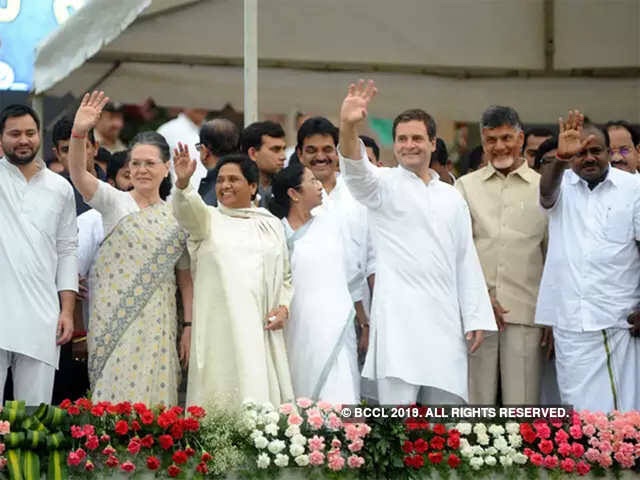
Someone really, really needed to have shown the Congress a mirror. In fact, people have tried for ages, but to no avail. And yet, anyone suggesting replacing Rahul is seen as jealous, biased, motivated or simply mean. However, people trying to break their heads to beg the Congress to change may not be any of that. Maybe they really do care about having two strong political parties in competition. This way we can have a healthy democracy, a strong party in power and an almost equally strong opposition. The Congress’s insistence on Rahul’s presence has damaged all that.

I don’t want to be mean, but here is a recent example of Rahulism. At his presser to congratulate PM Modi on his victory, these were some of his words: “Chahe kuch bhi ho jaaye… main sirf vaapis pyaar se jawaab doonga (whatever happens, I will only respond with love)…”

This theme of ‘let there be love’ was used by Rahul throughout the past elections. While it is nice to spread love like the Beatles or Bob Marley, one needs to realise you are fighting an election here. This is a battle. Rahul isn’t working for Art of Living or the Isha Foundation.

Countless articles have given suggestions on what Congress must do to revive. They have all fallen on deaf ears. The control by one family, which places its self-interest above the party and the country, means virtually no action has been taken to make Congress stronger. The chances of Rahul’s popularity suddenly rising, or the family waking up and doing the right thing are miniscule. Also improbable is the Congress hope of BJP making self-goals that will make voters flock to Congress again. This is unlikely, as this government seems to have an ear on the ground, even if they may not care much about the intellectuals.

Besides the leadership crisis, which is the most discussed shortcoming of the party, the precipitous decline of Congress should be explained in light of three more fundamental flaws that have facilitated the silent death of the party since the Indira Gandhi era. First, the complete lack of effort to nurture the grassroots level organizational structures of the party, which can help in mass mobilization. Second, the gradual shrinking of the social base of the party by alienating ambitious but fiery mass leaders in order to retain the supremacy of the central leadership of the party. Third, the complete lack of any consistent or coherent idea on which the party can build the narrative of its political identity to attract the people.

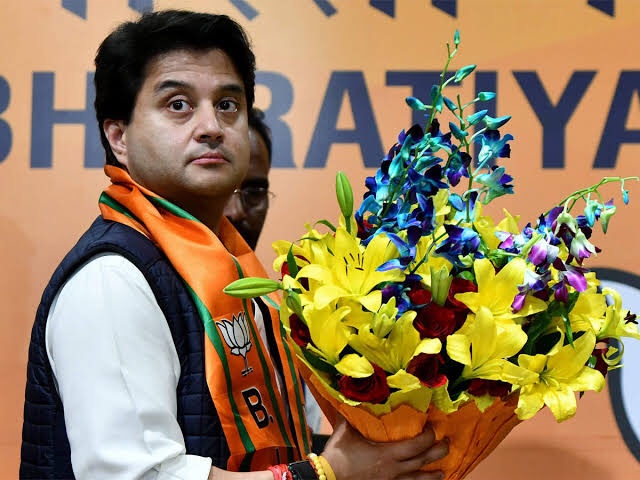
To add insult to injury, the irrational need to maintain unquestioning dominance over the party by the Gandhis restricted the rise of ambitious yet highly-skilled regional leaders, who were either cut down to size or shown the door. From the removal of strongmen like Jyotiradityarao Scindia (recent case) Devaraj Urs in Karnataka and Sharad Pawar in Maharashtra, to the more recent examples of Hemant Biswa Sharma in Assam and Y. S. Jaganmohan Reddy in Andhra Pradesh, the Congress has systematically alienated firebrand regional stalwarts simply to quell the unjustified insecurity of its central leadership. As a crude irony of destiny, the Congress paid a heavy price for its gross political miscalculation and has been rendered politically irrelevant in many states by the very leaders the party ignored. As opposed to the growth of strong regional leaders even within national parties like the BJP — Shivraj Singh Chauhan in Madhya Pradesh and Raman Singh in Chhattisgarh — the Congress’ aversion to the growth of mass leaders has rendered the party ineffective in key states.

Above all, Congress must realize that as much as they would like to believe that the rise of BJP is merely a product of Hindu polarization and the Modi wave, the secret of its success goes much beyond that. It is the organizational discipline, accommodative attitude, and clearly articulated political narrative that helps the Hindutva-Modi combine win. If Congress wishes resurrect its glory, it has to look beyond the question of leadership for rejuvenation. In order to arrest its terminal decline, the Congress needs to revisit its foundational principles and its rich political history to connect with the electorate.

Thanks..!!

K.Trivedi & M.Sodagar.

Part 1:Economic Slowdown: Everything is in the mind!!

In order to understand current economic scenario, let’s consider what happened during the Great Depression which started in 1929. Over the next four years, GDP per person (per capita income) went down by 20%. The impact of this fall in per-capita income on private consumption was huge. As Nobel Prize winning economist Robert J. Shiller writes in Narrative Economics: “Sales of new cars by Ford Motor Company… fell 86% from 1929 to 1932.” This fall in sales leads Shiller to ask: “Why was the feedback loop so severe?”

The answer lay in the mind of consumers. According to Shiller, “Those who already owned a car decided to keep the car going rather longer. Those who did not own a car, decided to continue taking public transportation.” For those who lost their jobs, it obviously made sense to postpone purchasing a car. Even those who were not impacted by the Great Depression postponed their car purchases (and purchases of other thing as well) given that they had a huge fear of losing their jobs.

This feedback loop hurt economic activity and destroyed more jobs in the process.

As Shiller writes: “Some people postponed buying a car or other major consumer items, which led to loss of jobs in the auto and consumer-products industries, which led to more postponement, which led to a second round of jobs loss.”

All this impacted consumer confidence and business confidence of that era. If the consumer confidence is high, the consumer will spend, the businesses will invest and the government will earn higher taxes, which it can spend on its programmes. Nobody understands this better than the politicians of the day.

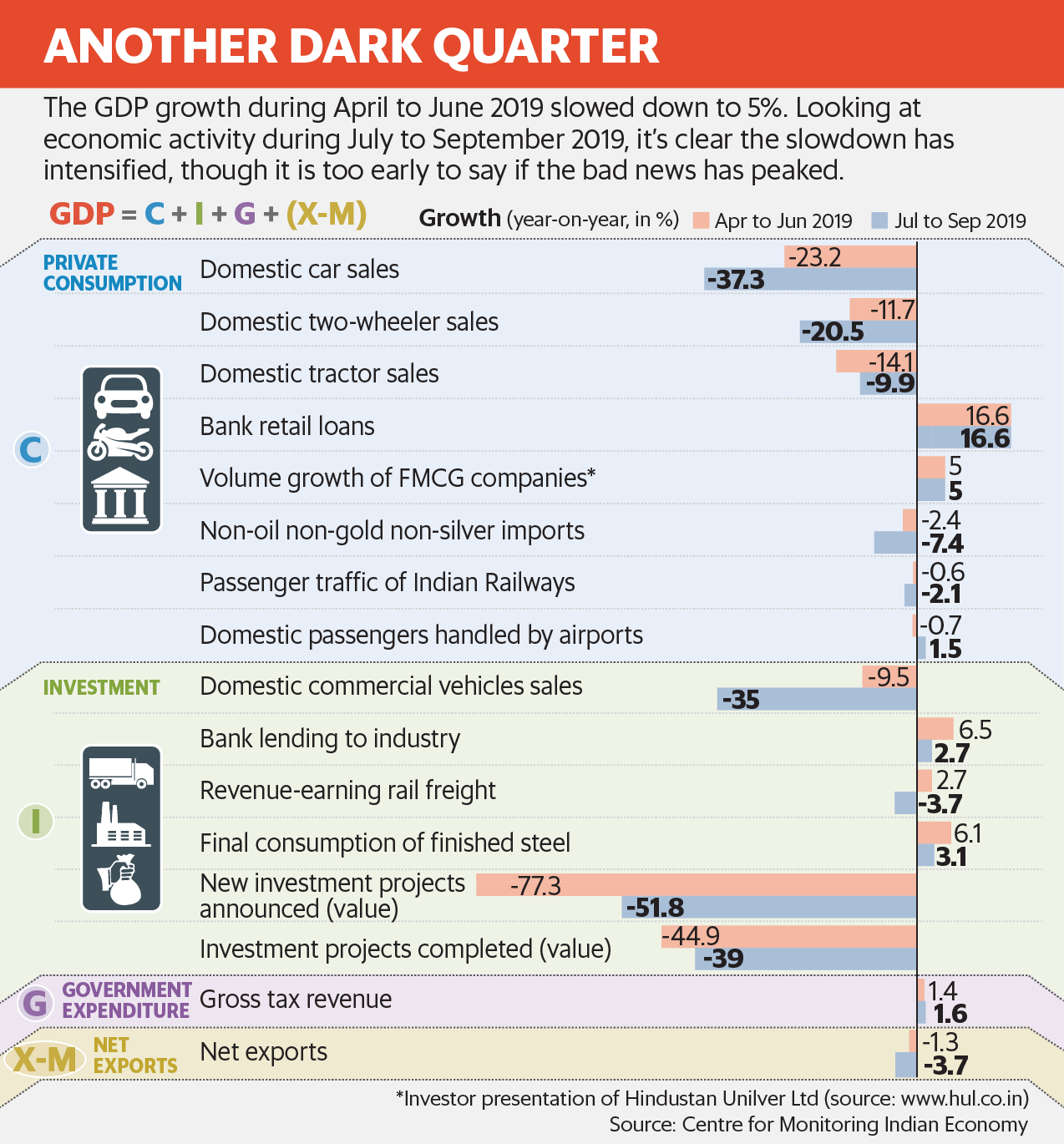
If all this sounds familiar, that’s because parts of this playbook are relevant in India today. Of course, India is nowhere near a depression or even a recession. The economy is going through a slowdown in economic growth . But the feedback loop is in place—and Indian politicians and policymakers have also tried to talk up the economy.


Major Concerns in current Indian Economic Scenario.

Structural Issues

To be sure, banks have shied away from financing large corporate projects, but whether this was due to risk aversion or the lack of new investment demand is a moot question. The steep fall in manufacturing and construction, and stagnant private investment — which led to the fall in GDP. Given the complex problems that plague many sectors, separating demand and supply factors will be a difficult exercise.

For instance, the power sector is in an existential crisis (non-honouring of PPAs, non-payment of dues, falling tariffs, etc) which has led to the scaling down or even closure of many power plants, a fact that could explain the fall in power generation in the IIP as well as declining manufacturing demand. Likewise, the stagnation in private investment, even after reduction in interest rates and tax rates, points to issues beyond demand — these could be due to excess capacities created in the past, a preference for short-term profit or a simple lack of will.

The belief that the slowdown is demand-driven, and therefore cyclical, seems based on hope. The play of structural factors cannot be ignored. First, the fact that private household consumption drives the economy (over 50 per cent of the GDP), can be misleading. The fact is, we are still a low-middle income country with a per capita GDP of around $2,000, and nearly 80 per cent of our consumption expenditure consists of spending on essentials.

We do not know much about consumption inequality, but there is a high level of income inequality. According to the World Inequality Report 2018, the top 10 per cent of India’s population got 54 per cent of all income while the bottom 50 per cent shared only 15 per cent. A skew such as this can impact demand in sectors like automobiles or consumer goods.


Employment pattern

The other structural problem relates to employment. Our labour markets have many growth-impeding rigidities — a low labour force participation ratio (which means a large section of working-age population, mainly women, choose not to work); a high percentage (over 70 per cent) of rural labour ostensibly engaged in agriculture, but adding little to productivity or income; and a large informal work structure, where reportedly about 46 per cent people are self-employed and 20 per cent casually employed, making income estimation little more than guesswork for two-thirds of the labour force.

The sectoral Gross Value Added (GVA) data as well as income tax data reinforce these facts. A large GVA signifies a higher share of wage incomes and capital surpluses. Thus, while agriculture had high value addition (78 per cent), its share in the national income was small because of the large labour force working at low or zero wages. In contrast, the services sector contributes over 50 per cent of the GDP and also has high value addition, but employs a far lesser proportion of labour (about 25 per cent). The combination of low per capita GDP and high income skew has, not surprisingly, led to a low tax-GDP ratio.

The newly-minted economics Nobel laureates have eloquently described why it is difficult to explain economic growth, much less policies that will lead to equitable growth. But they also point to the existence of inefficiencies and misallocations that present actionable opportunities for governments.


Getting to a $5-trillion GDP may help us cross over to upper-middle income status, but unless the growth is equitable and broad-based, the economy will be continue to be susceptible to gyrations of the kind witnessed now.

Clearly, the situation during July to September 2019 has only worsened in comparison to April to June 2019. The stock market might be doing well thanks to a few selected stocks rallying, but that hasn’t been able to lift the mood across the economy.

All in all, the psychology of the economic slowdown has well and truly set in.

To be continued…

Thank You!!

K. Trivedi & M. Sodagar

CAB: India getting in line with Indian Ethos “Vasudhaiva Kutumbakam”.

“The world will not be destroyed by those who do evil, but by those who watch them without doing anything.”

Albert Einstein

The Citizenship (Amendment) Bill, 2019 that seeks to give Indian nationality to communal minority refugees from Pakistan, Bangladesh and Afghanistan facing religious persecution there, was introduced and passed in both the houses and signed by President on 10th Dec 2019. The proposed legislation amends the Citizenship Act, 1955 to make minority refugees from Afghanistan, Bangladesh and Pakistan eligible for citizenship.

Highlights of the Citizenship Amendment Bill 2019.

  • The bill amends the Citizenship Act, 1955 to make minority communities in Afghanistan, Bangladesh and Pakistan eligible for Citizenship in India, in case they migrate to India fearing persecution in their countries.
  • Under the Citizenship Act 1955, some of the requirements for citizenship by naturalisation are,
    • Applicant must have resided in India for 12 months immediately before the application for citizenship.
    • Applicant must have also resided for 11 of the previous 14 years preceding the said period of 12 months.

However, under the amendment bill, this requirement has been relaxed to 6 years instead of earlier 11 years.


UN Convention of 1951 which defines a refugee as:

Someone who is unable or unwilling to return to their country of origin owing to a well-founded fear of being persecuted for reasons of race, religion, nationality, membership of a particular social group, or political opinion

This definition has been incorporated into the laws of many countries, including the 1980 Refugee Act in the United States. This act amended the Immigration and Nationality Law in the US and established a clear distinction between “immigrants” and “refugees.”

This is not discrimination against anybody. Civilized countries all over the world have policies that prevent people from being deported to places where they would be persecuted for their identity.

India is merely doing the same here. We are establishing a legal distinction between immigrants and refugees.


Outcry from Assam!!

A negative campaign looks to have misguided people in north-eastern states, especially Assam where people protested the passing of Citizenship Amendment Bill 2019 in the Lok Sabha.

The bone of contention is the cut-off date. According to Assam Accord 1985, migrants who came to India before March 24, 1971, were the only to be given citizenship. However, under the new law, this cut-off date has been pushed to December 31, 2014. Thus, the locals apprehend that this will increase influx of a greater number of people in the state of Assam which will negatively impact their businesses and livelihoods. However, here are some facts that should be considered before drawing such conclusions.

  • There has been less clarity on the fact that the new law will continue to filter out the large proportion of migrants from getting the citizenship (including the illegal migrants from Bangladesh which have a greater impact on the demography of north-eastern states). Only persecuted minorities from Bangladesh will be exempted.
  • Also, the said bill will have an effect all across the country and it’s not only specific to North-East or one particular state of Assam. The persecuted people who migrated from Pakistan to Rajasthan or other bordering states on western frontier will also get relief.

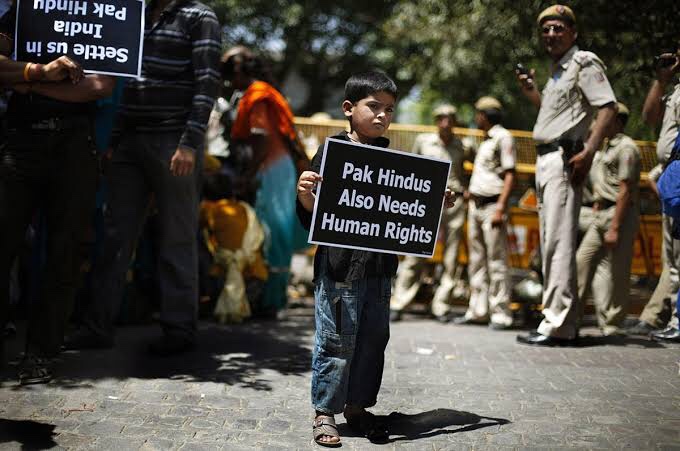
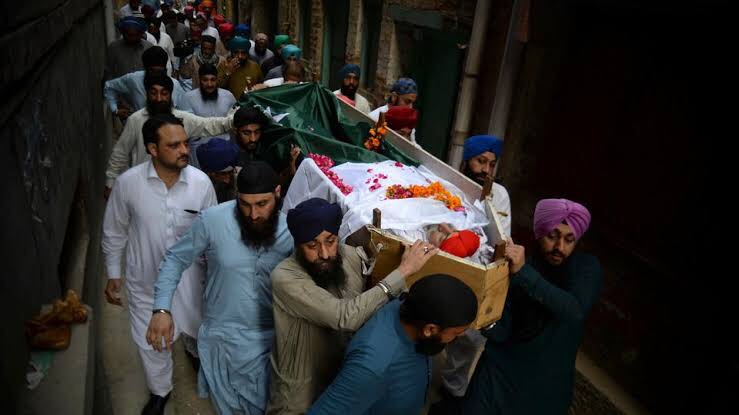
Atrocities on minorities in neighbourhood.

Pakistan

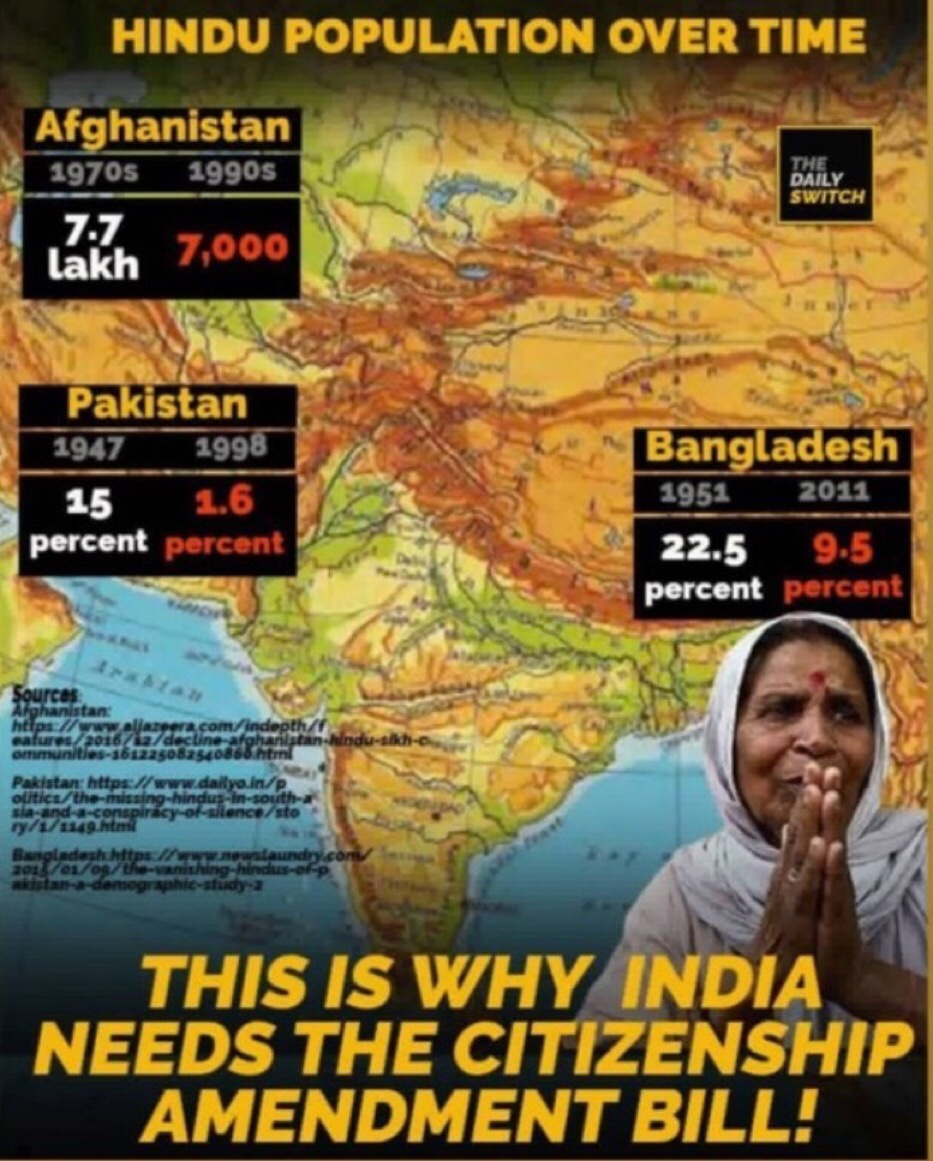
At the time of partition in 1947, almost 23% of Pakistan’s population was [composed] of non-Muslim citizens. Today, the proportion of non-Muslims has declined to approximately 3%. The distinctions among Muslim denominations have also become far more accentuated over the years. Muslim groups such as the Shias who account for approximately 20-25% of Pakistan’s Muslim population, Ahmadis who have been declared non-Muslim by the writ of the state, and non-Muslim minorities such as Christians, Hindus and Sikhs have been the targets of suicide bomb attacks on their neighborhoods, had community members converted to Islam against their will, and had their houses of worship attacked and bombed even while they were inhabited by worshipers.

Bangladesh

The Hindu population of Bangladesh suffered considerable as a consequence of political events since 1947. They were particularly targeted during the Bangladesh Liberation War as many Pakistanis blamed them for the secession, resulting in targeted executions, rape and other human rights abuses against Hindu communities. According to the official 1951 census for East Bengal (East Pakistan) Hindus consisted of 22 per cent of the total population of the province, a number that had been depleted to 15 per cent to 1991 and in the 2011 census were numbered at just 8.5 per cent. Nevertheless, they remain the largest religious minority group in Bangladesh.

Afghanistan

In the 70s, there were around 700,000 Hindus and Sikhs, and now they are estimated to be less than 7,000.Although there is no census data available in the country to estimate exact numbers due to years of war and conflict, the community members themselves speculate that there are perhaps no more than a few thousand Hindus and Sikhs left today.


Conclusion

The Citizenship Amendment Bill 2019 passed in Lok Sabha upholds Indian ethos of giving refuge to people persecuted in their original countries. Since ages, communities like Parsis or Jews sought refuge in India when they were religiously persecuted in their countries. They are today, in fact, part of the nation-building process. On the similar lines, the government is steering the current bill which provides refuge to persecuted minorities in Afghanistan, Bangladesh and Pakistan.

MAHA-DRAMA

“In politics, nothing happens by accident. If it happens you can bet it was planned that way.”

Franklin D. Roosevelt

Maha-Chaos

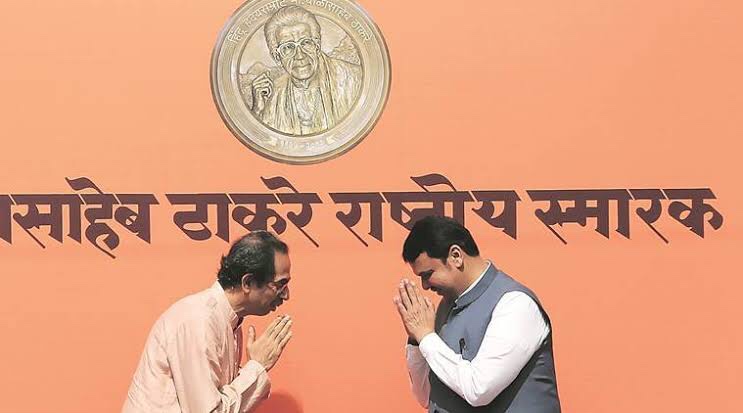
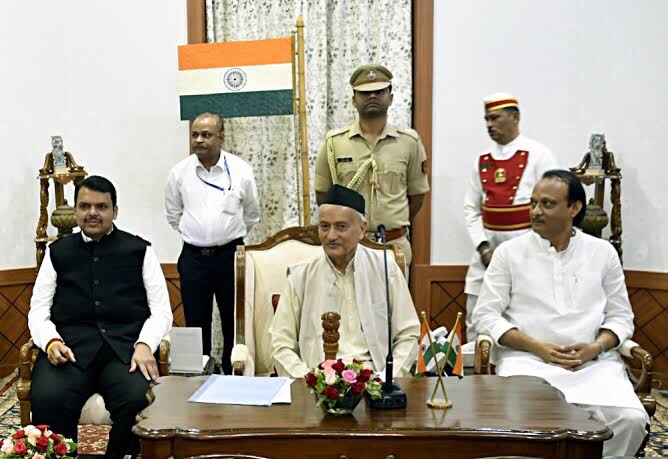
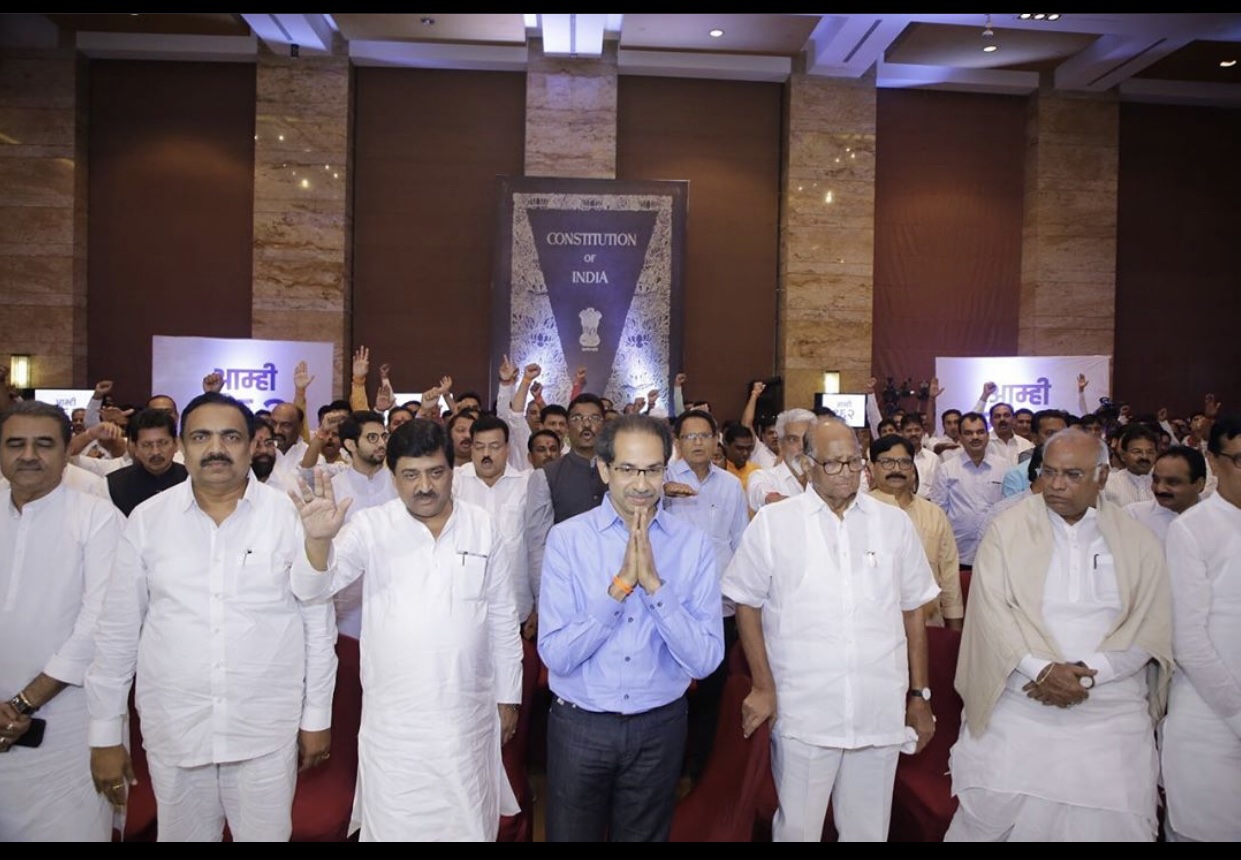
Maharashtra politics remains a mystery with a floor test appearing to be the only solution to end the impasse. It is indeed a rare sight to catch the newspapers napping when most of them had declared Sena’s Pramukh Uddhav Thackeray to be the next chief minister of Maharashtra only to watch the hurried swearing in of Devendra Fadnavis and Ajit Pawar on Saturday morning.

After the Shivsena-NCP-Congress (Maha-Vikas Aghadi) alliance raised a hue and cry about the BJP’s midnight play for Maharashtra’s government on Saturday, the Supreme Court ordered a floor test to be held on Wednesday, 27 November.

However, even as both sides, BJP-Ajit Pawar and the Shiv Sena-NCP-Congress alliance claimed to have larger numbers than the other, NCP-defector-turned-BJP ally, Ajit Pawar, has announced his resignation as Maharashtra’s deputy chief minister.

Soon after this news, Devendra Fadnavis, who was sworn in as chief minister in an early morning ceremony at the Governor’s residence around 7 am on 23 November, Saturday, has also announced his resignation.


Whose Gain Whose Loss?

The real lesson from Maharashtra is not about any one political party’s victory or defeat, but about the state of politics in the country and what it has done to all of us. Maharashtra exposes the fact as to how the practice of politics has corrupted everything and everyone that it has touched. No one is left with any right to speak. Everyone’s greed and opportunism have helped to cancel out everyone else’s greed and opportunism.

The language surrounding these episodes casts Amit Shah as the mastermind and Pawar as the ‘old fox’. Double-crosses are a source of delight. Subversion of the Constitution is thought of as a clever gambit. The absence of any real outrage in any quarter is a sign of how far we have come. What happened in Goa, Karnataka, Haryana and Maharashtra, just to cite a few recent instances, are seen as part of a game, one which must be played without any set of rules. This is sport, cinema, theatre, not real life.

And everyone is infected. The liberal commentators who suddenly suspended their otherwise visceral dislike for the Shiv Sena and urged the Congress to act quickly to seal the deal, are not that different from the BJP supporters who on the one hand, object to the Shiv Sena’s actions on grounds of betraying the mandate of the people and on the other, rejoice when their party ties up with those they campaigned against as being ‘naturally corrupt’. They also have no problems when politicians are widely known to be corrupt magically turn clean when they join the BJP.

Ajit Pawar is only safeguarding his future by getting a get-out-of-jail-card. Shiv Sena is only using the leverage it has to grab power, mindful that this opportunity may not come again. The Congress is doing whatever it can to prevent the BJP from coming to power. The BJP would be foolish not to use all its resources to retain power in an important state. For the liberals, any action that can help stop the BJP juggernaut is seen as legitimate, for how do you fight such a dominant force without mirroring its methods.


But what’s in the end?

What the bitter truth is we don’t really care which party promise what? Who supported whom and who was once a bitter enemy?

This has brought us to political juncture where the only ‘ism’ that matters to all is opportunism of grabbing power and neither secularism nor nationalism.

Thank you!

Khush T & Manan S